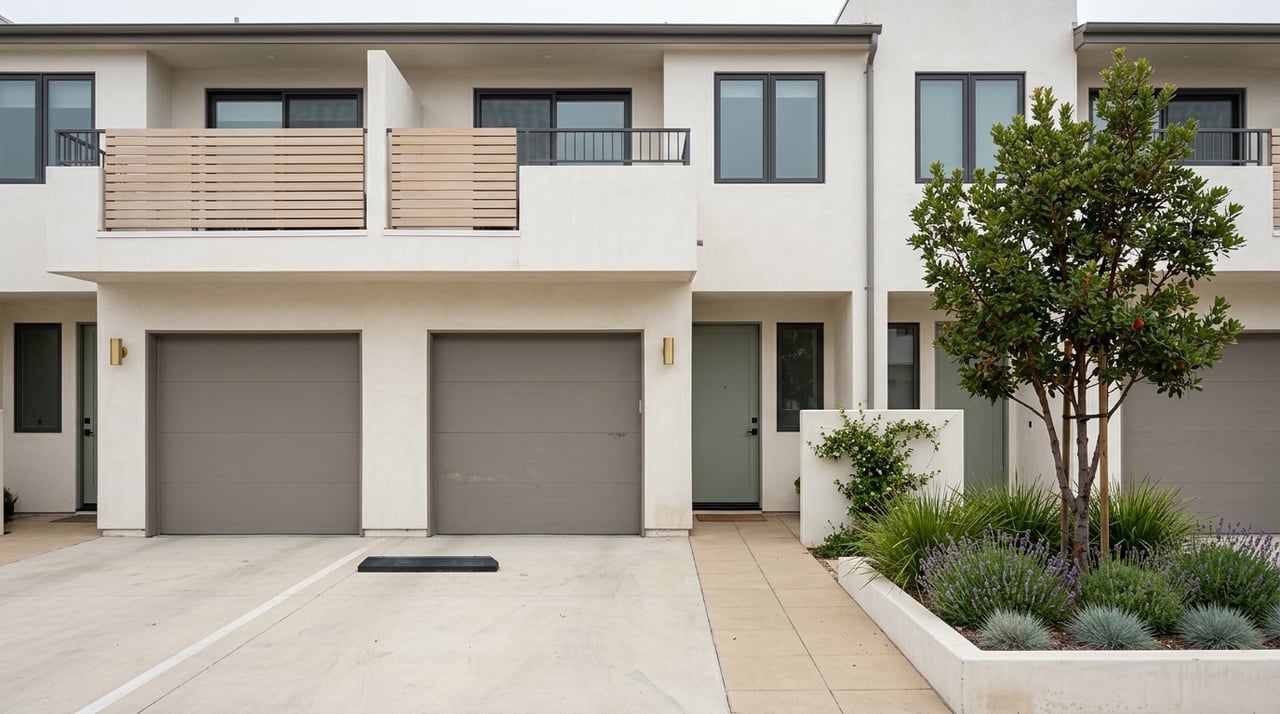
If you are trying to buy a condo or townhome in Alameda’s West End, you have probably noticed that this market is not one-size-fits-all. A lower price point than many detached homes can make attached housing feel like a smart entry into Alameda, but the details matter, from HOA finances to parking rights to how quickly homes move. This guide will help you understand how the West End condo and townhome market works, what to look for, and how to prepare so you can move forward with more confidence. Let’s dive in.
West End Market Snapshot
West End’s condo and townhome market is active and fairly tight. Recent public market snapshots show condos for sale with median listing prices in roughly the low-to-high $800,000s and days on market in the low-to-mid 30s, depending on the source and reporting window.
That lines up with broader Alameda attached-home data. Bay East’s May 2026 Alameda attached report shows a median sale price of $800,000, 2.5 months of supply, and an average sold price per square foot of $555.
For many buyers, that is the key starting point. Alameda’s detached market sits at a higher price tier, with Bay East reporting a March 2026 detached median sale price of $1.2 million and an average sold price per square foot of $749.
Why Buyers Look at West End
West End appeals to buyers for more than price alone. The area offers access to ferry service, AC Transit bus service, the free Oakland-Alameda water shuttle to Alameda Landing, and bikeways across town, according to the City of Alameda.
That access can be a real advantage if you want a home that supports commuting, errands, and everyday life without relying on a detached-home budget. Public listing data also describes West End as fairly walkable, which adds to the appeal for buyers who value convenience.
West End Attached Homes Vary A Lot
One of the biggest things to understand is that West End attached housing is a mix of older communities and newer redevelopment. City materials identify recent and planned projects that include flats-style condos, townhouse units, and townhome-style condos.
That means you may see a wide range of homes in the same search. Some listings are compact one-bedroom condos in the high-$300,000s, while larger newer townhomes can be near or above $1 million.
In practical terms, West End is not a single product type. It is a spectrum that includes smaller lower-entry condos, mid-range two-bedroom options, and larger garage-equipped townhomes.
Condo Label Versus Legal Ownership
This is where many buyers get tripped up. A home may be marketed as a townhome, but that does not automatically tell you how the property is legally owned or maintained.
In West End, you may see traditional condo units, townhouse-style condos, and other attached-home setups. The right way to confirm what you are buying is to review the title documents and CC&Rs, not just the marketing description.
That distinction affects more than vocabulary. It can shape maintenance responsibilities, insurance questions, common-area rights, and how parking or storage is assigned.
Amenities Buyers Commonly See
West End condo and townhome listings often include features that buyers want but may not get at the same purchase price in a detached home. Common examples in current listings include:
- Private balconies
- Community rooms
- Landscaped grounds
- In-unit laundry
- Central A/C
- Garages
- Extra storage
For many buyers, that trade-off makes sense. You may give up a private yard, but gain convenience, newer finishes, shared amenities, or a more manageable exterior-maintenance setup.
Parking Matters More Than You Think
In West End attached housing, parking can be a major value driver. Some homes offer a one-car garage with storage, some have attached two-car garages, and some condo communities place more emphasis on shared amenities than private parking.
That is why you should confirm exactly what comes with the property. A parking space or storage area may be deeded, assigned, or granted as exclusive use common area, and those are not the same thing.
Under California law, exclusive-use rights for parking and storage can exist if the declaration allows them. Still, the details should be verified in the title documents and HOA materials so your day-to-day expectations match the legal reality.
EV Charging Questions to Ask
If you own or plan to own an electric vehicle, ask about charging early. California Civil Code Section 4745 protects the installation or use of an EV charging station in an owner’s unit or designated parking space, including a deeded space or exclusive-use common-area space, subject to reasonable restrictions and safety requirements.
That does not mean every setup is simple or automatic. It does mean you should review the community rules, the parking structure, and any installation requirements before you get too far into the process.
HOA Review Is Part of the Home Review
When you buy a condo or townhome, the HOA package is not background paperwork. It is part of the property.
California law requires the seller to provide important association documents, including governing documents, the most recent annual budget report, current regular and special assessments and fees, unresolved violation notices, any rental-restriction statement, and, if the buyer requests them, board meeting minutes from the prior 12 months plus the most recent inspection report.
That package gives you a clearer picture of how the community operates. It can also help you spot issues that may affect your costs, flexibility, or comfort level after closing.
Why Timing Matters
The HOA document timeline matters more than many buyers expect. Under California law, once the association receives a written request, it must provide the requested documents within 10 days.
That is helpful, but it still means buyers should request the HOA packet early. Waiting too long can compress your review period and make an already competitive transaction feel more stressful.
What to Look For in the Budget and Reserves
A healthy-looking monthly HOA fee does not tell the full story. You also want to understand what the association collects, what it spends, and whether reserves appear strong enough for future repairs.
California law requires the annual budget report to include a pro forma operating budget and a reserve summary. Reserve law also requires a visual inspection of major components at least once every three years, annual review of the reserve study, and a funding plan for major components with less than 30 years of remaining useful life.
This matters because assessment risk is real. If reserves are short, an association may need to finance repairs or impose an emergency assessment.
Assessment Limits and Insurance Gaps
California law generally limits boards from imposing regular assessment increases above 20 percent in a fiscal year or special assessments above 5 percent of budgeted gross expenses without member approval. Even so, buyers should not assume that means there is no financial risk.
You should also review the HOA insurance summary carefully. The master policy may not cover your personal property, your improvements, or the deductible exposure you could face after a claim.
Maintenance Responsibilities Are Not Always Obvious
A big reason condo and townhome ownership can feel easier is that you are often not handling all exterior upkeep yourself. But the exact split between owner and association depends on the legal documents.
California law generally provides that the association is responsible for common-area repairs and, unless the declaration says otherwise, the owner is responsible for the separate interest. For exclusive-use common area, the owner generally maintains it while the association repairs or replaces it.
That is important if you are comparing a balcony, patio area, garage access, or other space that feels private but may not be fully owned in the same way as the interior of the home.
Rental Rules Need a Closer Look
If you think you may want to rent the property later, do not leave that question for the end. Review the rental-restriction statement in the HOA documents and ask for clarity on any leasing rules.
This matters in Alameda because the city treats single-family homes, condos, and townhomes as partially regulated rental units under its rent program. The HOA packet can also tell you whether the association has its own rental limits or procedures.
How Competitive the Market Is
West End buyers should be ready for a market that can move quickly. Redfin reports that homes average about one offer and sell in around 27 days, with a 109.7 percent sale-to-list ratio over the last three months, while Bay East’s May 2026 Alameda attached report shows buyers paying 105 percent of list price.
That does not mean every listing becomes a bidding war. It does mean preparation matters, especially when a well-priced home offers the layout, parking, and location features many buyers want.
Smart Offer Strategy for West End Buyers
In this market, speed alone is not enough. A strong offer starts with understanding your likely monthly costs and your must-have features before you write.
Here are practical steps that can help:
- Request the HOA packet immediately
- Review current dues, special assessments, and any already approved increases
- Check reserve health and the reserve summary
- Confirm whether parking and storage are deeded, assigned, or exclusive use
- Make sure garage access matches how you plan to live in the home
- Budget for HOA dues, possible future increases, and insurance deductible exposure
- Compare newer construction pricing with older community carrying costs
If you are looking at a newer West End community, it also helps to compare the new-construction premium against the monthly costs and condition profile of older HOA stock. City development materials show additional attached housing activity in projects such as Alameda Marina, Bay 37, and the Former Pennzoil Site, which may shape buyer choices across the area.
Why West End Can Be a Strong Fit
For many buyers, West End condos and townhomes hit a useful middle ground. You can often stay below detached-home price levels while still getting location access, functional amenities, and less direct exterior maintenance.
The key is to look beyond the headline price. In this segment of Alameda’s market, the best decision usually comes from understanding the full picture, including ownership structure, HOA health, parking, and monthly carrying costs.
If you want help comparing West End condos and townhomes, reviewing what makes one community different from another, or building a smart plan for a competitive Alameda search, the Andrea Ruport Team is here to help.
FAQs
What is the typical price range for West End Alameda condos and townhomes?
- Current West End attached listings span a wide range, from some one-bedroom condos in the high-$300,000s to larger newer townhomes near or above $1 million.
How competitive is the West End Alameda condo market?
- Recent data shows a fairly competitive market, with attached homes in Alameda selling around 105 percent of list price in May 2026 and West End homes moving in roughly the low-to-mid 30-day range.
What HOA documents should you review for a West End Alameda condo or townhome?
- You should review the governing documents, annual budget report, current assessments and fees, unresolved violation notices, rental-restriction statement, and, if requested, recent board meeting minutes and the most recent inspection report.
How do parking rights work in West End Alameda condo communities?
- Parking may be deeded, assigned, or granted as exclusive-use common area, so you should confirm the legal structure in the title documents and CC&Rs rather than relying on the listing description alone.
Can you install EV charging in a West End Alameda condo or townhome?
- California law protects the installation or use of an EV charging station in an owner’s unit or designated parking space, including certain deeded or exclusive-use spaces, subject to reasonable restrictions and safety rules.
Why do West End Alameda townhomes and condos often cost less than detached homes?
- Bay East data shows attached homes in Alameda at a lower median sale price and lower average sold price per square foot than detached homes, which is one reason many buyers use condos and townhomes as an entry point into Alameda.