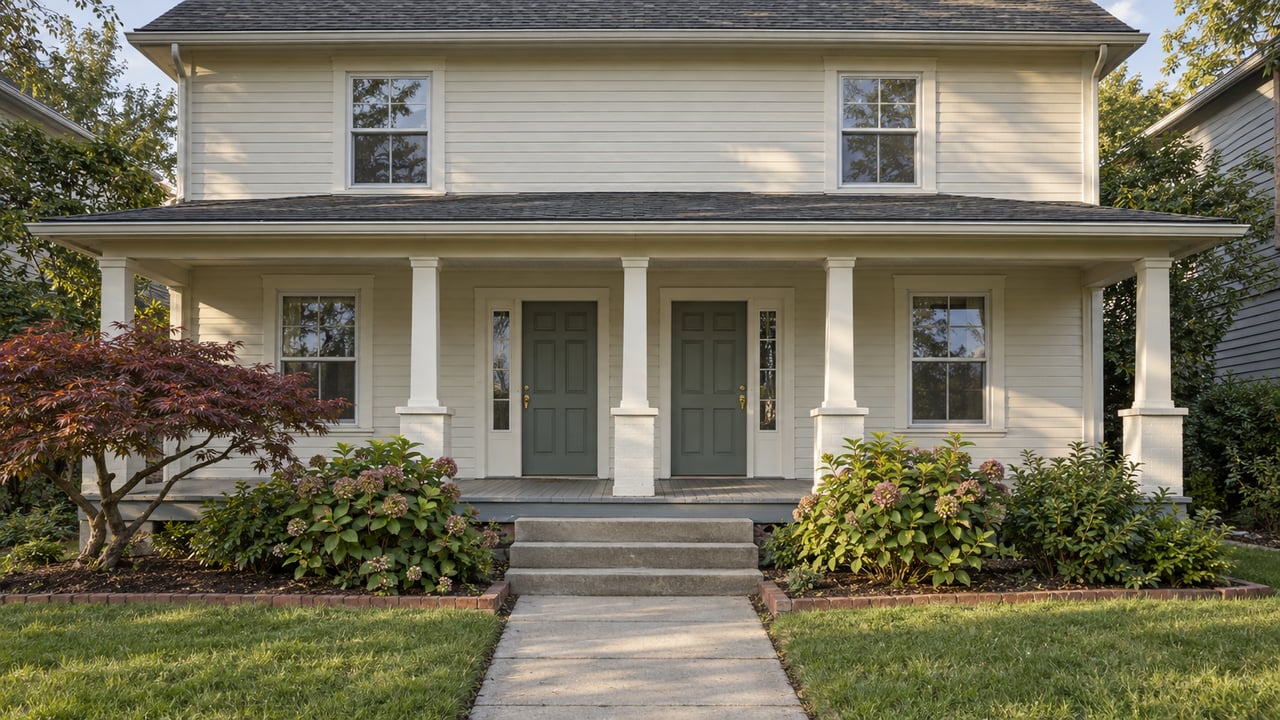
Two duplexes, four blocks apart, both listed within the same month, both priced within a few thousand dollars of each other. On paper they look like a coin flip for an investor comparing units in Alameda's West End. Same roofline era, same rough square footage, same walk to Webster Street. The difference that actually matters shows up nowhere on either listing sheet: one building went up before February 1995, the other after. That single fact decides how much rent either owner can ever charge tenants to catch up with the market.
Alameda has its own rent control ordinance, and it does not sort buildings the way most buyers assume. It is not about whether a property is a single-family home or a duplex in the way San Francisco or Berkeley draws that line. According to RentCheckMe, it is about two things at once: whether the property has two or more units on a legal lot, and whether that building existed before February 1995. Get both yes answers and the unit falls under the city's Annual General Adjustment, a rent cap set once a year by the Alameda Rent Program. A property that misses either condition, because it has only one unit or was built later, falls outside the AGA.
A Rule That Reads the Building, Not the Block
According to SLPM, the Annual General Adjustment for the year running from September 1, 2025 through August 31, 2026 sat at 1.0%, the lowest the ordinance allows. As of September 1, 2026, that cap reset to 2.7% for the year running through August 2027, per the Rent Program's own announcement. Compare that to AB 1482's statewide ceiling, which ran at 6.3% through July 31, 2026.
Two Ceilings, One Zip Code
| Period | Alameda AGA (2+ units, built before February 1995) | Statewide AB 1482 |
|---|---|---|
| Sept 2025 – Aug 2026 | 1.0% | 6.3% (through July 31, 2026) |
The West End includes housing of different ages and types. A pre-1995 duplex a block off Webster Street and a post-1995 townhome at Bayport or a newer building near Alameda Point are examples of West End housing.
Where the Line Actually Falls in the West End
This is where the West End's own history draws the map for you. The Alameda Naval Air Station closed on April 25, 1997, and everything built on that reclaimed land since then, the townhomes and condos of Bayport, the newer construction flanking Alameda Landing, the residential blocks going up around Alameda Point, sits on the post-1995 side of the line almost by definition. Bayport itself was developed in the mid-2000s around roughly 632 single-family homes anchored by Ruby Bridges Elementary.
Move a few blocks toward the older residential grid near Webster Street, where Craftsman bungalows and converted Victorians sit two and three units to a lot, and the calculation flips. A five-unit property listed this year spanning two buildings on one lot on 3rd Street and Spruce, with five two-bedroom units and a projected gross annual income near $152,628, is a textbook case of West End's older multi-unit stock. If that building predates February 1995, and much of that block does, its owner is capped at the AGA.
Banked Increases
The ordinance also lets landlords bank unused increases from prior years, but the banking rule has its own ceiling: total banked increases can never exceed 8.0%, and any single year's increase, banked amounts included, cannot exceed the current AGA plus 3.0 percentage points. With the AGA now at 2.7%, that formula caps the maximum possible single-year increase on a fully regulated unit at 5.7%, even with banked increases in hand. A pre-1995 duplex owner who has been under-raising rent for years still cannot leap past that number in one jump.
The Paperwork That Makes or Breaks the Cap
None of this matters if the building isn't properly registered. Landlords of covered units must file an Annual Registration Statement and pay per-unit program fees with a deadline of August 31 each year. Miss it, and the Rent Program classifies the owner as being in substantial non-compliance: the right to raise rent at all disappears, the owner is barred from filing a Fair Return petition, and late fees compound at 10% per unit per month, up to a 60% maximum. On a five-unit building, that penalty structure turns a manageable few hundred dollars in fees into a real liability fast.
For a buyer, this turns registration status into a diligence item as concrete as a roof inspection.
What to Ask Before Writing an Offer
- What year was the structure actually built, not just the lot developed? Permit records through the city, not the listing sheet, settle this.
- How many legal units are on the lot?
- Is the building currently registered with the Alameda Rent Program, and is the registration current for this filing year?
- Has the owner banked any unused rent increases, and if so, how much of that banked amount remains available under the 8.0% ceiling?
- Are there any open petitions, either landlord or tenant filed, sitting with the Rent Review Advisory Committee?
FAQ
Does this rule apply if I buy a single-family home in the West End to rent out? No. Single-family homes and individually owned condos fall outside the AGA rent cap regardless of when they were built, because state law shields that property type from local rent caps.
If I add a legal second unit to a pre-1995 house, does that pull it under the AGA? Adding a unit changes the property's unit count, which is one of the two conditions the ordinance checks, so it is worth confirming directly with the Alameda Rent Program before finalizing plans. This isn't legal advice, and specific circumstances vary enough that a phone call to the Rent Program office is worth the ten minutes.
A duplex on the wrong side of a construction date isn't a bad investment. It's a different investment, with a different growth ceiling built into it before an offer is ever written. Knowing whether a specific West End address meets the AGA's coverage conditions before you run the numbers is the difference between a projection that holds up and one that quietly falls short every single year.
If you're comparing West End properties and want someone to help pull the construction records and registration status before you write an offer, the Andrea Ruport Team can walk that diligence with you street by street.